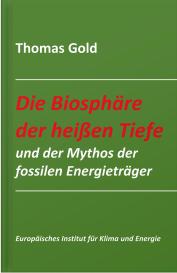
This book sets forth a set of truly controversial and astonishing theories: First, it proposes that below the surface of the earth is a biosphere of greater mass and volume than the biosphere the total sum of living things on our planet's continents and in its oceans. Second, it proposes that the inhabitants of this subterranean biosphere are not plants or animals as we know them, but heat-loving bacteria that survive on a diet consisting solely of hydrocarbons that is, natural gas and petroleum. And third and perhaps most heretically, the book advances the stunning idea that most hydrocarbons on Earth are not the byproduct of biological debris ("fossil fuels"), but were a common constituent of the materials from which the earth itself was formed some 4.5 billion years ago.
The implications are astounding. The theory proposes answers to often-asked questions: Is the deep hot biosphere where life originated, and do Mars and other seemingly barren planets contain deep biospheres? Even more provocatively, is it possible that there is an enormous store of hydrocarbons upwelling from deep within the earth that can provide us with abundant supplies of gas and petroleum?
However far-fetched these ideas seem, they are supported by a growing body of evidence, and by the indisputable stature and seriousness Gold brings to any scientific debate. In this book we see a brilliant and boldly original thinker, increasingly a rarity in modern science, as he develops potentially revolutionary ideas about how our world works.
Thomas Gold war ein amerikanischer Astrophysiker österreichischer Herkunft, der mit aufsehenerregenden Forschungsarbeiten auf den verschiedensten Gebieten bekannt wurde.
Nach seinem B.A.-Studium am Trinity College in Cambridge (Großbritannien) ab 1939 arbeitete er ab 1942 als Wissenschaftsoffizier der britischen Admiralität an der Entwicklung des Radars und der U-Boot-Abwehr. Ab 1946 forschte er zum menschlichen Gehör und zum menschlichen Innenohr. Seine Theorien über einen aktiven Verstärkungsmechanismus mit Oszillatoren im Ohr, die er in seiner Master-Arbeit formulierte, konnten erst 44 Jahre später bestätigt werden.
1952 wurde Gold Chief Assistant to the Astronomer Royal in Herstmonceux, Sussex. 1956 erhielt er eine Professur für Astronomie an der Harvard University. Zugleich wurde er Berater der NASA. Von 1959 bis 1981 war er Vorsitzender des Astronomie-Departments der Cornell University, wo er das „Cornell Center for Radiophysics and Space Research (CRSR)“ gründete und für den Bau des Radioobservatoriums in Arecibo (Puerto Rico) verantwortlich war, der größten Radioantenne der Welt, die zur Erforschung des Weltraums eingesetzt wurde.
Gold veröffentlichte zahlreiche Abhandlungen zu Fragen der Astronomie, Geophysik und der Physik der Planetenräume. Von ihm stammte die erste Erklärung der Pulsare als rotierende Neutronen-Sterne.
Nach seinem Ruhestand 1985 arbeitete Thomas Gold an Fragen der Geophysik und Geochemie und dabei vor allem über die Entstehung von Erdöl und Erdgas und entwickelte die Hypothese einer abiotischen, nichtfossilen Entstehung der Kohlenwasserstoffe.
Bitte beachten Sie die Kontaktangaben des Herstellers bei Fragen zur Produktsicherheit.
Kontakt für Produktsicherheit
Springer Nature Customer Service Center GmbH
Europaplatz 3
69115 Heidelberg
E-Mail:
ProductSafety@springernature.com