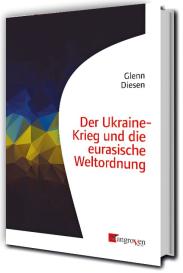
This book defines Russophobia as the irrational fear of Russia, a key theme in the study of propaganda in the West as Russia has throughout history been assigned a diametrically opposite identity as the ¿Other.¿ Propaganda is the science of convincing an audience without appealing to reason. The West and Russia have been juxtaposed as Western versus Eastern, European versus Asiatic, civilized versus barbaric, modern versus backward, liberal versus autocratic, and even good versus evil. During the Cold War, ideological dividing lines fell naturally by casting the debate as capitalism versus communism, democracy versus totalitarianism, and Christianity versus atheism. After the Cold War, anti-Russian propaganda aims to filter all political questions through the simplistic binary stereotype of democracy versus authoritarianism, which provides little if any heuristic value to understand the complexities of relations. A key feature of propaganda against the inferior ¿Other¿ is both contemptuous derision and panic-stricken fear of the threat to civilization. Russia has therefore throughout history been allowed to play one of two roles¿either an apprentice of Western civilization by accepting the subordinate role as the student and political object, or a threat that must be contained or defeated. While propaganda has the positive effect of promoting unity and mobilizing resources toward rational and strategic objectives, it can also have the negative effect of creating irrational decision-making and obstructing a workable peace.
Chapter 1. Theorising propaganda.- Chapter 2. Stereotypes of anti-Russian propaganda. - Chapter 3. Source credibility: Herding the masses.- Chapter 4. Language and narratives in anti-Russian propaganda.- Chapter 5. Selling democracy: All nations are equal, but some are more equal than others.- Chapter 6. Russophobia against the political opposition.- Chapter 7. The conflict in Ukraine as a civilizational choice.- Chapter 8. The Syrian war and humanitarian interventionism.- Chapter 9. Propaganda and the risks from irrationality.
Glenn Eric Andre Diesen (* 1979) ist ein norwegischer Politologe und Professor an der Universität von Südot Norwegen. Er studierte nach dem Schulbesuch an der Universität Wollongong, wo er 2001 den Abschluss eines Bachelor of Commerce erwarb, und an der Universität Sydney, wo er 2004 einen Masterabschluss (Master of Business) erwarb. Anschließend studierte er russische Sprache und Literatur an der Universität von Sankt Petersburg. 2009 erlangte er einen Master-Abschluss im Fach internationale Beziehungen der Macquarie University. 2014 folgte der PhD-Abschluss im Bereich Politik und Internationale Beziehungen, den ihm die Vrije Universität in Amsterdam und die Macquarie University gemeinsam für eine von Wolfgang Wagner und Steve Wood betreute Dissertation verliehen. Seine Arbeit befasste sich mit zwischenstaatlichen Institutionen, die der Gewährleistung kollektiver Sicherheit dienen und Sicherheitspolitischen Problemen, speziell mit den Beziehungen der EU und der NATO zu Russland seit dem Zusammenbruch der Sowjet-Union Anfang der 1990er Jahre. Die Arbeit ist ideel der politologischen Denkschule des Realismus verpflichtet und fokussiert sich besonders auf institutionelle Einflüsse auf die außenpolitische Haltung von Entscheidungsträgern in der EU und der NATO. In den Jahren 2011 bis 2017 war Diesen als Dozent (lecturer) und Fellow am Department of Security Studies and Criminology der Macquarie University und von 2016 bis 2019 als Forscher (adjunct research fellow) an der School of Social Sciences and Psychology der Western Sydney University tätig. Als Gastforscher lehrte er von 2018 bis 2020 an der an der Fakultät für Weltwirtschaft und Internationale Beziehungen der Höheren Schule für Wirtschaft in Moskau. 2020 erhielt er eine beigeordnete Professorenstelle an der Universität von Südost Norwegen, die 2021 zu einer ordentlichen Professur aufgewertet wurde. Diesen Forschungsschwerpunkt sind die russische Außenpolitik, der Konservativismus als Denkrichtung und die wechselseitige Annäherung vieler eurasischer Staaten. Seit 2018 fungiert er als Herausgeber der Fachzeitschrift Russia in Global Affairs.
Bitte beachten Sie die Kontaktangaben des Herstellers bei Fragen zur Produktsicherheit.
Kontakt für Produktsicherheit
Springer Nature Customer Service Center GmbH
Europaplatz 3
69115 Heidelberg
E-Mail:
ProductSafety@springernature.com